
Genetic testing is reshaping dog breeding by making it more informed and science-based. It helps breeders identify health risks, prevent inherited diseases, and ensure healthier puppies. Here’s why it matters:
- Healthier Puppies: Tests detect over 270 genetic disorders, reducing the risk of inherited diseases like hip dysplasia or cataracts.
- Better Breeding Choices: Identifies carriers of recessive traits, allowing breeders to avoid pairing two carriers and producing affected puppies.
- Maintaining Diversity: Testing ensures genetic diversity isn’t sacrificed while improving breed health.
- Transparency for Buyers: Breeders can provide health guarantees and share detailed genetic results, building trust.
Skipping genetic testing can lead to health issues, shorter lifespans, and reduced genetic diversity in dogs. Programs like Polar White Labs demonstrate how thorough testing and responsible breeding can produce healthier, happier dogs for families and working roles.
How to Discuss Genetic Health Results w/ New Puppy Owners – Canine Health Summit – Embark Veterinary

What Happens When Breeders Skip Genetic Testing
Health Condition Prevalence: Sporting Dogs vs Mixed-Breed Dogs Comparison
When breeders skip genetic testing, they miss out on critical information about their dogs’ genetic makeup. This oversight allows harmful gene variants to pass from one generation to the next, often unnoticed until health problems emerge. Over time, these issues can pile up, leading to shorter lifespans and chronic conditions.
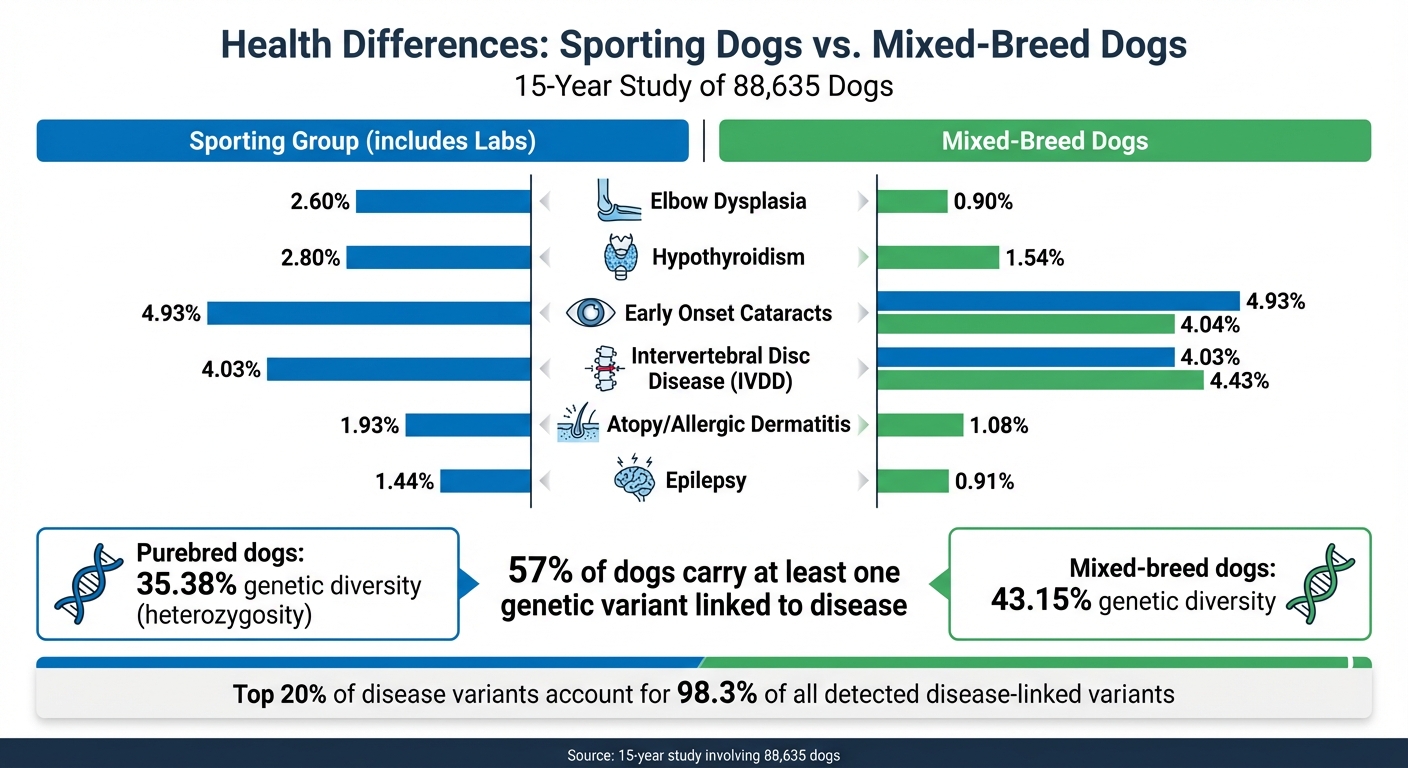
A February 2023 study published in PLOS Genetics examined 1,054,293 dogs and found that 57% carried at least one genetic variant linked to disease. If breeding programs ignore testing, these variants can combine in offspring, turning carriers into dogs that develop serious health problems. Purebred dogs without genetic monitoring are particularly at risk, showing only 35.38% genetic diversity (heterozygosity) compared to 43.15% in mixed-breed dogs. This reduced diversity makes them more susceptible to recessive disorders.
Inherited Diseases in Dogs
Take Labrador Retrievers, for example. They are prone to several inherited conditions, and DNA testing is crucial to identify risks. Tests for disorders like CNM, EIC, PRA-prcd, DM, HNPK, and IVDD are essential. Beyond genetic tests, physical screenings, such as hip X-rays and heart exams, are also necessary to catch structural and cardiac issues.
Health Differences Between Tested and Untested Breeding Programs
The gap between breeding programs that use genetic testing and those that don’t is striking. Programs that skip testing report higher rates of disease, lower litter viability, and shorter lifespans. A 15-year study involving 88,635 dogs revealed how common inherited conditions are across different breeds.
| Health Condition | Sporting Group (includes Labs) | Mixed-Breed Dogs |
|---|---|---|
| Elbow Dysplasia | 2.60% | 0.90% |
| Hypothyroidism | 2.80% | 1.54% |
| Early Onset Cataracts | 4.93% | 4.04% |
| Intervertebral Disc Disease (IVDD) | 4.03% | 4.43% |
| Atopy/Allergic Dermatitis | 1.93% | 1.08% |
| Epilepsy | 1.44% | 0.91% |
Genetic testing is the only reliable way to identify carriers – dogs that seem healthy but carry a single copy of a disease-causing gene. When two carriers are bred, the genetic odds are clear: 25% of the puppies will inherit the disease, 50% will be carriers, and only 25% will be unaffected. This cycle repeats with each generation, compounding the problem.
Research led by Jonas Donner and his team found a direct connection between lower genetic diversity and a higher prevalence of inherited diseases. In fact, the top 20% of disease variants accounted for a staggering 98.3% of all detected disease-linked variants. Without testing, these harmful genes accumulate over time, putting entire bloodlines at risk. This stark contrast underscores why genetic testing is so critical for healthier breeding practices.
How Genetic Testing Improves Breeding
Genetic testing has revolutionized the way breeders approach their work, offering a detailed look at DNA to identify potential genetic issues before they arise. With modern testing panels capable of screening for over 270 genetic disorders at once, breeding decisions are now guided by science rather than guesswork.
There are two primary types of genetic tests: direct tests and indirect tests. Direct tests focus on identifying specific mutations, making them highly accurate for pinpointing the exact DNA changes responsible for a disease. Indirect tests, on the other hand, rely on nearby markers to assess genetic risks.
“Genetic testing is a powerful tool that has been used for decades to preserve the integrity of breeds. Today, it is increasingly utilized by animal owners, breeders, and veterinarians to make informed mating and management decisions.”
- Dr. Rebecca Bellone, Director, UC Davis Veterinary Genetics Laboratory
Finding Carriers and At-Risk Dogs
For autosomal-recessive conditions, genetic testing categorizes dogs into three groups: Clear (no abnormal genes), Carrier (one abnormal gene), and Affected (two abnormal genes). This classification is essential because carriers, while appearing healthy, can still pass on disease-causing genes to their offspring.
Armed with this information, breeders can make informed pairing decisions. For instance, mating a carrier with a clear dog ensures no affected puppies are born, with offspring being approximately 50% clear and 50% carriers.
| Mating Pair | Clear Offspring | Carrier Offspring | Affected Offspring |
|---|---|---|---|
| Clear x Clear | 100% | 0% | 0% |
| Clear x Carrier | 50% | 50% | 0% |
| Carrier x Carrier | 25% | 50% | 25% |
Some conditions involve incomplete penetrance, where a dog may carry a genetic variant without developing the associated disease. In these cases, test results are reported as risk-based (e.g., minimal or increased risk) rather than definitive outcomes.
While identifying carriers is crucial, breeders must also balance this with efforts to preserve the breed’s overall genetic diversity.
Maintaining Genetic Diversity
It might seem logical to eliminate all carriers from a breeding program, but doing so can have unintended consequences. Removing too many dogs based on a single genetic trait could significantly reduce genetic diversity, potentially harming the breed in the long run.
“For recessive conditions, testing can allow people to safely breed carriers to unaffected animals while avoiding producing offspring affected with a devastating disease.”
- Dr. Danika Bannasch, Maxine Adler Endowed Chair in Genetics, UC Davis
A key tool for managing genetic diversity is the Coefficient of Inbreeding (COI), which measures how closely related two dogs are. This metric estimates the likelihood that a puppy will inherit identical copies of a gene from a shared ancestor. Breeders are encouraged to aim for a COI at or below the breed’s average to maintain healthy genetic variation. Tools like Litter Predict can even forecast the health, traits, and genetic diversity of a potential litter before breeding begins.
Another important consideration is limiting the use of popular sires. When a single stud dog fathers too many litters, his genetic traits – including potentially harmful recessive mutations – can become overly dominant in the breed’s gene pool. This “popular sire effect” can lead to reduced genetic diversity and an increased risk of inherited diseases.
sbb-itb-84987df
Benefits for Puppies and Their Owners
Genetic testing has proven to be a game-changer in preventing inherited disorders, but its advantages go beyond health. It also supports better puppy temperaments and provides peace of mind for owners. By focusing on both physical and behavioral traits, genetic testing ensures healthier, happier puppies and reassures their future families.
Healthier Puppies with Lower Disease Risk
Genetic testing helps breeders identify carriers of harmful genetic variants before breeding, reducing the chances of passing on heritable health issues. This proactive method significantly lowers the risk of common breed-specific conditions.
The numbers back it up. For example, the AKC DNA + Health test screens for over 328 health markers, catching the majority of genetic risks before they affect a litter. This allows breeders to produce puppies with fewer inherited diseases.
Early detection also gives veterinarians a head start. They can recommend treatments like special diets, tailored exercise plans, or even preventive surgeries before conditions escalate. DNA profiling further ensures that health records are tied to the correct lineage, eliminating errors in pedigree documentation.
Beyond physical health, genetic testing also plays a role in shaping a puppy’s personality and suitability for specific roles.
Better Temperament and Working Ability
Genetic testing doesn’t just address health – it also provides insights into behavioral traits. Modern testing panels can identify markers linked to temperament, helping breeders raise puppies with stable and well-adjusted personalities suited for family life.
For puppies destined for specialized roles, such as service dogs or hunting companions, genetic screening becomes even more critical. Certain conditions, like Exercise-Induced Collapse (EIC), can disqualify a dog from high-energy tasks, making pre-breeding screenings essential for producing reliable working animals.
The AKC is actively working to connect genetic data with performance records from detection dogs. This research could eventually lead to genetic profiles that predict a puppy’s potential for success in demanding roles.
“In the future, we may be able to develop genetic profiles that predict working success.”
- Dr. Claire Wiley, VMD, DACVIM, Executive Director, AKC DNA Program
Responsible breeders don’t rely on genetics alone. They pair genetic testing with temperament evaluations to ensure puppies are well-suited for their future homes and tasks. This combination of health and behavior screening creates dogs that thrive both physically and mentally.
Transparency and Confidence for Buyers
Genetic testing also builds trust between breeders and buyers. When breeders share test results, they show accountability and professionalism. Many breeders go a step further by registering health and genetic data with public databases like the Orthopedic Foundation for Animals (OFA) or the Canine Health Information Center (CHIC). This allows buyers to independently verify a puppy’s family health history.
DNA profile numbers included on AKC certificates permanently link a dog to its genetic identity. With over one million dogs already profiled through the AKC parentage program, buyers can trust that the pedigree information they receive is accurate. This level of transparency reassures families that they’re bringing home a puppy with the best possible start in life.
Genetic Testing at Polar White Labs at Shallow Branch Farm
Full-Panel Genetic Testing
Polar White Labs at Shallow Branch Farm partners with Embark Veterinary, Inc. to conduct extensive genetic testing on all breeding dogs. This includes screening for 271 health conditions and 25 specific disorders commonly seen in Labrador Retrievers. Their process adheres to the core recommendations set by the Labrador Retriever Club and the AKC, covering critical tests such as Exercise-Induced Collapse (EIC), Centronuclear Myopathy (CNM), Progressive Retinal Atrophy (PRA-prcd), and the D Locus (Dilute) test. These screenings focus on detecting hereditary issues related to neuromuscular function, metabolism, skeletal structure, and vision. Every AKC-registered puppy comes with detailed genetic health documentation, ensuring that only dogs with a clean genetic profile are part of the breeding program. This attention to detail forms the backbone of the farm’s health guarantees, offering peace of mind for new owners.
2-Year Health Guarantee
Polar White Labs provides a 2-year guarantee against genetic defects. This guarantee reflects their confidence in the thoroughness of their testing and breeding practices. However, it also emphasizes the shared responsibility of puppy owners to maintain the dog’s health through proper nutrition and regular veterinary care. By combining strong genetics with a healthy environment, the farm ensures the best outcomes for each puppy. Beyond the guarantee, they offer ongoing support to new owners.
Support for New Owners
New owners benefit from weekly photo updates leading up to adoption, helping them stay connected during the waiting period. The farm also provides guidance during the critical adjustment phase and remains available for questions even after adoption. For those unable to visit in person, the farm handles AKC registration and offers professional delivery services. One owner from North Carolina shared how regular communication eased their concerns. L. Boalch also shared:
“He’s also been very helpful with any questions I’ve had after bringing them home”.
This combination of rigorous genetic testing and dedicated owner support ensures that every puppy has the best chance to thrive. By standing alongside owners throughout their journey, Polar White Labs positions itself not just as a breeder but as a lifelong partner in the care of each dog.
Conclusion
Genetic testing transforms breeding from an uncertain art into an informed science. This shift benefits everyone in the process – puppies start life with a much lower chance of inheriting diseases, breeders gain the tools to make thoughtful decisions that protect genetic diversity, and owners receive greater clarity and confidence in their new companion.
The data underscores just how impactful genetic testing can be. Modern testing panels give breeders a detailed understanding of their breeding stock, helping them manage carriers of genetic conditions while safeguarding the overall health of the breed.
For future dog owners, the benefits of genetic testing go well beyond the initial purchase. When breeders like Polar White Labs at Shallow Branch Farm screen for 271 health conditions and offer a 2-year health guarantee, it reflects their dedication to ethical breeding and transparency.
These advantages continue throughout a dog’s life. Knowing a dog’s genetic predispositions allows veterinarians to create tailored care plans – like specialized diets or exercise regimens – before potential health issues arise. Combined with good nutrition and regular veterinary checkups, puppies with a strong genetic foundation are set up to thrive as service animals, working dogs, or cherished family members.
Incorporating genetic testing into breeding practices not only promotes responsible breeding but also builds lasting trust between breeders and owners. If you’re thinking about welcoming a Labrador Retriever into your home, make sure to review the health testing results for both parents. Reputable breeders, like those at Polar White Labs at Shallow Branch Farm, will gladly share these results and explain how they impact your puppy’s future health.
FAQs
How does genetic testing help ensure healthier puppies?
Genetic testing is a powerful tool for breeding healthier puppies. By identifying inherited conditions through specific genetic markers, breeders can make informed decisions to avoid pairing dogs that might pass on hereditary diseases. This careful planning significantly lowers the chances of health problems in future litters, paving the way for stronger, healthier dogs.
At Polar White Labs at Shallow Branch Farm, genetic testing is a cornerstone of their breeding program. This commitment ensures that their White English Labrador Retrievers are not only stunning and even-tempered but also set up for long, healthy lives.
Why is genetic diversity essential in dog breeding?
Genetic diversity plays a key role in safeguarding the health and well-being of dogs over time. A broad gene pool helps breeders minimize the chances of inherited diseases, lowers the risks tied to inbreeding, and supports the development of healthier, more resilient puppies.
Maintaining genetic variety also supports responsible selective breeding. This approach allows breeders to prioritize traits like good temperament, physical health, and suitability for different tasks. As a result, each new generation of dogs is better prepared to thrive, whether they’re serving as family pets, service animals, or working partners.
Why is genetic testing important in dog breeding?
Genetic testing is a game-changer in dog breeding, ensuring the health and well-being of both puppies and breeding lines. By identifying hereditary conditions like progressive retinal atrophy or other breed-specific health concerns, breeders can make smarter choices to reduce the risk of passing these issues to future generations.
This testing supports responsible breeding practices, leading to healthier, stronger dogs. It also sheds light on a dog’s traits – like temperament and physical structure – helping owners find the ideal companion or working partner. At Polar White Labs at Shallow Branch Farm, genetic health testing is a key part of their approach to breeding high-pedigree White English Labrador Retrievers, ensuring families and service organizations receive happy, healthy puppies.